PMP Exam Prep, Ultimate Study Guide and Passing Strategy
· based on the channel PrepSolution
Key takeaways
- PMP exam covers People, Process, and Business Environment domains.
- Agile and predictive project management concepts are both tested.
- Effective study plans balance theory, practice questions, and review.
- Time management and question analysis improve exam performance.
- Free PMP practice questions available at PrepSolution enhance readiness.
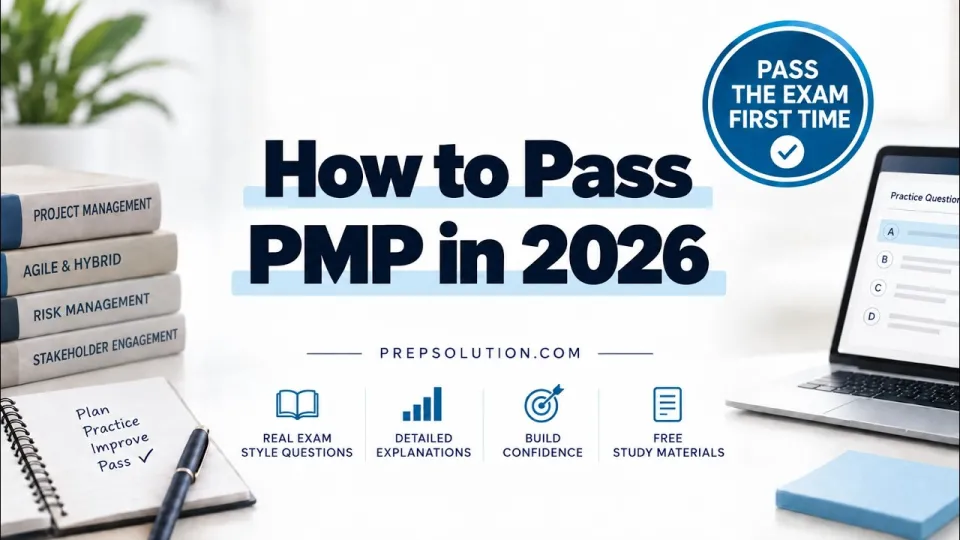
Preparing for the PMP exam requires a structured approach that combines understanding key project management domains with strategic test-taking skills. The PMP Exam Prep focuses on mastering People, Process, and Business Environment areas, alongside Agile and predictive methodologies, to ensure comprehensive readiness. You can start your preparation by accessing free practice questions at PrepSolution's PMP free practice site, which provide valuable exposure to the exam format and question types.
Understanding the PMP Exam Domains
The PMP exam is divided into three main domains: People, Process, and Business Environment. These domains reflect the real-world responsibilities of project managers and require a deep understanding of both technical and interpersonal skills.
- People focuses on leadership, team management, conflict resolution, and communication skills.
- Process covers project lifecycle, planning, executing, monitoring, and controlling techniques.
- Business Environment involves aligning projects with organizational strategy and compliance.
Mastering these domains calls for not just memorization but also application of concepts through scenario-based questions.
Incorporating Agile and Predictive Concepts
The 2026 PMP exam includes questions on both predictive (traditional waterfall) and Agile approaches. Understanding the differences, benefits, and challenges of each methodology is crucial. Agile topics include Scrum roles, ceremonies, and iterative development, while predictive methods emphasize detailed upfront planning and sequential phases.
Balancing study time between these approaches ensures you can confidently answer questions regardless of their methodology context. Use real project examples to solidify your grasp.
Crafting an Effective Study Plan
A well-structured study plan maximizes efficiency and retention. Follow these steps:
- Assess your baseline knowledge by taking an initial practice test.
- Allocate time for each domain based on your strengths and weaknesses.
- Incorporate daily study sessions with focused goals.
- Use varied resources such as PMBOK Guide, Agile Practice Guide, and online courses.
- Regularly practice exam questions to identify patterns and reinforce learning.
Consistency and gradual progress prevent burnout and improve confidence.
Test-Taking Strategies for PMP Exam
Effective test-taking goes beyond knowledge. Employ these strategies:
- Read questions carefully to understand the context and what is being asked.
- Eliminate obviously wrong answers to improve odds if guessing.
- Manage your time wisely, dedicating no more than one minute per question.
- Flag difficult questions and return if time permits.
- Stay calm and focused to avoid careless mistakes.
Practicing these techniques during mock exams can simulate real exam conditions.
Utilizing PMP Exam Prep Materials
High-quality prep materials are essential. PrepSolution offers comprehensive practice questions and a complete pass system tailored to the 2026 exam format. These materials provide:
- Realistic question scenarios
- Detailed explanations
- Progress tracking
Engaging with such resources complements your study plan and builds exam-day confidence.
Useful Links
- Free PMP practice questions: https://prepsolution.com/free-practice/pmp?utm_source=youtube&utm_medium=video&utm_campaign=pmp_longform&utm_content=pmp_longform_v01
- PMP Complete Pass System: https://prepsolution.com/exam/pmp?utm_source=youtube&utm_medium=video&utm_campaign=pmp_longform&utm_content=pmp_longform_v01
Conclusion
Success on the PMP exam hinges on a balanced study approach covering People, Process, and Business Environment domains, along with Agile and predictive concepts. Building a consistent study plan, practicing with quality materials, and employing smart test-taking strategies are key to passing confidently. For ongoing support and practice questions, visit PrepSolution’s free resources linked above. Their expert guidance ensures you stay focused and prepared throughout your PMP certification journey.
Questions & answers
What are the main domains covered in the PMP exam?
The PMP exam focuses on three domains: People, Process, and Business Environment. These cover leadership skills, project execution, and aligning projects with organizational goals.
How important is Agile knowledge for the PMP exam?
Agile concepts are a significant part of the PMP exam, alongside traditional predictive methods. Understanding Agile roles, ceremonies, and iterative workflows is essential to answer related questions effectively.
What study materials are recommended for PMP exam prep?
Recommended materials include the PMBOK Guide, Agile Practice Guide, online courses, and practice question banks like those offered by PrepSolution. Combining these helps ensure a comprehensive understanding.
What test-taking strategies improve PMP exam performance?
Effective strategies include carefully reading questions, eliminating wrong answers, managing time wisely, flagging difficult questions for review, and maintaining calm to reduce errors.
Source: PMP Exam Prep 2026 | Ultimate Study Guide & Passing Strategy · Markdown version