How to Understand the Amazonian Mushroom and Its Scientific Background
· based on the channel Shroomverse
Key takeaways
- Amazonian mushroom often refers to Psilocybe species native to the Amazon rainforest.
- The name has a complex scientific paper trail revealing its taxonomy and history.
- Its cultural use is tied to indigenous Amazonian rituals and spirituality.
- Scientific classification has evolved with new research clarifying species identity.
- Shroomverse explores the historical documents and myths behind this mushroom.
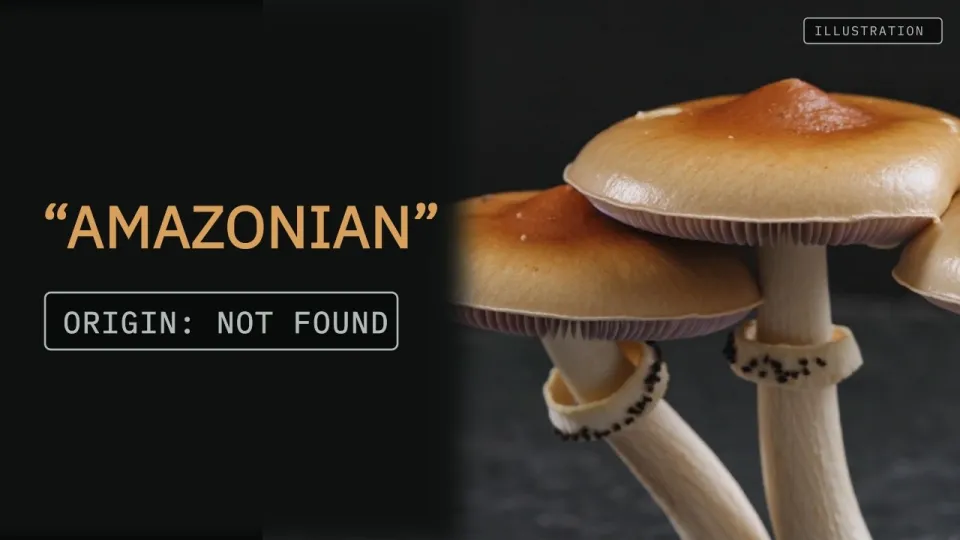
The Amazonian mushroom is a term commonly used to describe certain Psilocybe species found in the Amazon rainforest, known for their psychoactive properties. Understanding the Amazonian mushroom involves tracing its scientific classification and cultural significance, which are intertwined with indigenous traditions and modern mycology.
The Origin and Meaning of the Amazonian Mushroom Name
The name "Amazonian mushroom" primarily refers to mushrooms from the Psilocybe genus collected in the Amazon basin. These fungi have been subjects of ethnomycological studies due to their traditional use in spiritual ceremonies by indigenous peoples. The term itself has a complex history based on early scientific descriptions and subsequent taxonomical revisions. Early papers attempted to classify these mushrooms based on morphology and geographical origin, leading to some confusion in naming conventions 02:15.
Scientific Classification and Paper Trail
The taxonomy of Amazonian mushrooms has evolved as researchers revisited original descriptions and compared specimens. Key species include Psilocybe cubensis and Psilocybe amazonicus, the latter named to reflect its Amazon roots. The scientific literature shows a trail of papers starting from initial 20th-century classifications to molecular studies in recent decades. This paper trail highlights changes in genus placement, synonymy, and the discovery of new species closely related to the Amazonian mushroom 04:40.
Cultural Significance and Indigenous Use
Amazonian mushrooms have a rich history of use in indigenous rituals. Various tribes have used these mushrooms for shamanic journeys, healing, and spiritual communication. The ethnobotanical research documented these traditions, emphasizing how the local names and practices differ but share the common thread of the mushrooms’ psychoactive effects. This cultural context is essential for understanding why the Amazonian mushroom remains significant beyond scientific interest 07:10.
Challenges in Identification and Research
Identifying Amazonian mushrooms accurately is challenging because of their morphological similarity to other Psilocybe species and environmental variability. Researchers rely on both field observations and DNA analysis to differentiate species. The Shroomverse channel explains how some misidentifications in the past have complicated the scientific paper trail and how modern methods are helping to clarify these issues 10:25.
Conservation and Sustainable Use
The Amazon rainforest is a biodiverse ecosystem where these mushrooms grow naturally. Conservation efforts are important because habitat loss threatens many fungal species, including the Amazonian mushroom. Sustainable use by indigenous communities is also a subject of interest to mycologists and ethnobotanists, balancing cultural preservation with environmental protection 12:50.
Summary
Understanding the Amazonian mushroom requires examining its scientific taxonomy, cultural importance, and ecological context. The paper trail behind its naming reveals a fascinating journey through mycological research and indigenous knowledge. For those interested in ethnomycology and taxonomy, the Amazonian mushroom exemplifies the complexity of fungal classification and cultural heritage. This article is based on insights from the Shroomverse channel, which provides detailed analysis and historical perspectives on this topic.
Amazonian Mushroom: Following the Paper Trail Behind the Name by Shroomverse is a valuable resource for deepening understanding of these remarkable fungi.
Questions & answers
What species are commonly referred to as the Amazonian mushroom?
The Amazonian mushroom usually refers to Psilocybe species native to the Amazon region, such as Psilocybe cubensis and Psilocybe amazonicus.
Why is the scientific naming of Amazonian mushrooms complex?
Scientific naming is complex due to historical classification changes, morphological similarities, and new molecular studies that have refined the taxonomy over time.
How do indigenous communities use Amazonian mushrooms?
Indigenous groups use Amazonian mushrooms in spiritual and healing rituals, often for shamanic journeys and communication with the spiritual world.
What challenges exist in researching Amazonian mushrooms?
Challenges include accurately identifying species due to morphological similarities, habitat variability, and reconciling traditional knowledge with scientific classification.
Source: Amazonian Mushroom: Following the Paper Trail Behind the Name · Markdown version